

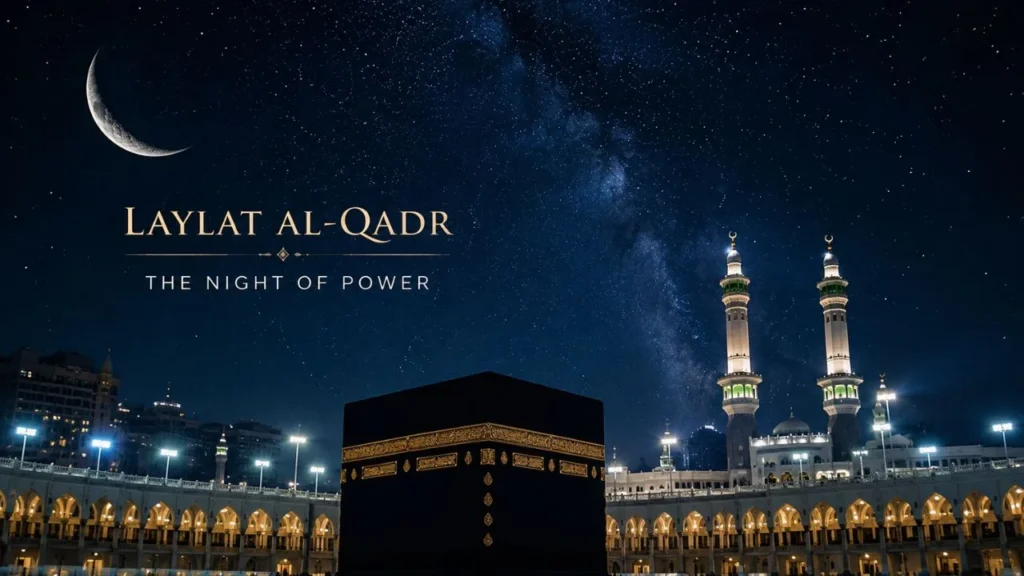
Quick Answer: Surah Qadr (Chapter 97) describes Laylat al-Qadr, the night the Quran began its revelation — a night the Quran itself calls “better than a thousand months” (over 83 years). Its core benefits are: complete forgiveness of previous sins for sincere worship on that night (authentic hadith, Bukhari & Muslim), a reward that outweighs a lifetime of ordinary worship, and a deepened awareness of angels descending with peace until dawn. Below is what’s authentically established, what it means in practice, and exactly when and how to seek this night.
Table of Contents
What Is Surah Qadr?
Surah Al-Qadr (سورة القدر) is the 97th chapter of the Quran — just 5 verses long, making it one of the shortest chapters, yet one of the most consequential. Scholars differ on whether it was revealed in Makkah or Madinah, but its subject is undisputed: it announces the night the Quran began descending to the Prophet Muhammad ﷺ, known as Laylat al-Qadr, the Night of Decree (or Night of Power).
| Detail | Information |
| Surah Number | 97 |
| Total Verses | 5 |
| Revelation | Debated (Makki or Madani) |
| Juz | 30 (Amma) |
| Meaning of Name | Decree / Power / Honor |
| Central Event | The night the Quran’s revelation began |
| Key Promise | “Better than a thousand months” (97:3) |
You can read the full Arabic text and translation of Surah Al-Qadr here, with audio recitation and a downloadable PDF.
The Five Verses, in Arabic and Translation
إِنَّا أَنزَلْنَاهُ فِي لَيْلَةِ الْقَدْرِ (١) وَمَا أَدْرَاكَ مَا لَيْلَةُ الْقَدْرِ (٢) لَيْلَةُ الْقَدْرِ خَيْرٌ مِّنْ أَلْفِ شَهْرٍ (٣) تَنَزَّلُ الْمَلَائِكَةُ وَالرُّوحُ فِيهَا بِإِذْنِ رَبِّهِم مِّن كُلِّ أَمْرٍ (٤) سَلَامٌ هِيَ حَتَّىٰ مَطْلَعِ الْفَجْرِ (٥)
Translation: Indeed, We sent the Quran down on the Night of Decree. And what will make you understand what that night is? The Night of Decree is better than a thousand months. On it, the angels and the Spirit descend, by their Lord’s permission, carrying out every command. It is peace, all the way until the break of dawn.
Read on its own, without commentary, the surah has a distinct rhythm: a statement, a rhetorical question meant to provoke awe, an answer that defies ordinary measurement, a description of unseen activity, and finally, stillness. That structure is part of why so many reciters describe the surah as feeling different from other short chapters — it moves from announcement to astonishment to peace in just five lines.

Why Was Surah Qadr Revealed?
Classical commentators connect this surah directly to Surah Al-Alaq, the very first chapter revealed to the Prophet ﷺ in the Cave of Hira. Where Al-Alaq records what was revealed — the command to “read” — Surah Qadr steps back and explains the cosmic weight of the moment itself.
Some tafsir traditions mention that the Prophet ﷺ was made aware of how much shorter his followers’ lives were compared to earlier nations, whose righteous individuals sometimes worshipped for far longer lifespans. Laylat al-Qadr is described in this context as a compensating mercy — a single night in which sincere worship can match or exceed what took others years to achieve. Whether or not every detail of that account is historically precise, the underlying lesson is consistent with the rest of the Quran’s message: Allah’s mercy compensates for human limitation.
What Does “Qadr” Actually Mean?
The Arabic word Qadr carries more than one layer of meaning, and classical scholars have discussed at least three:
| Meaning | Explanation |
| Honor / Greatness | The night carries immense status because of what descended on it — the Quran itself. |
| Decree | Many exegetes hold that on this night, the year’s decreed matters — provision, life events — are conveyed to the angels tasked with carrying them out. |
| Constriction | A linguistic reading suggesting the earth becomes “crowded” with the sheer number of angels descending. |
Whichever nuance is emphasized, all three point back to the same center: the night’s value comes entirely from its connection to the Quran’s revelation, not from any independent quality of the night itself.
5. 8 Authentic Benefits of Surah Qadr and Laylat al-Qadr
Directly Rewarded in Hadith
1. Complete forgiveness of previous sins. The Prophet ﷺ is reported in Sahih al-Bukhari and Sahih Muslim to have said that whoever stands in prayer on Laylat al-Qadr with sincere faith and in hope of reward will have their previous sins forgiven. This is one of the most well-established, authentically graded virtues attached to any single night in the Islamic calendar.
2. A reward greater than 83 years of worship. The Quran’s own words — “better than a thousand months” — mean that sincere worship on this one night can outweigh, in reward, more than eight decades of ordinary devotion. This isn’t a scholarly estimate; it’s stated directly in verse 3.
3. The specific dua the Prophet ﷺ recommended. When Aisha (RA) asked what to say if she recognized the night, the Prophet ﷺ taught her a short supplication asking Allah — who loves to pardon — for pardon (recorded by At-Tirmidhi, graded sahih). Because it’s short and specific, it’s one of the easiest authentic practices to actually carry out during the night.
Reflective and Spiritual Benefits
4. Recalibrates how you measure worship and time. Internalizing that a single night can outweigh a lifetime challenges the instinct to measure faith only in years of practice or age. It reframes a few focused hours of sincerity as more valuable than long stretches of routine, distracted worship.
5. Strengthens belief in the unseen (angels). Verse 4 describes angels and “the Spirit” (understood by most scholars to mean Jibril) descending “for every matter.” Reflecting on this makes belief in the angelic realm feel less abstract and more woven into lived experience, especially during the night itself.
6. Offers a concrete antidote to despair over past sins. For someone who feels they’ve fallen too far to recover spiritually, the promise of complete forgiveness for sincere worship on this night is a direct, practical source of hope — not a vague reassurance, but a specific act tied to a specific, repeatable opportunity every year.
7. Builds anticipation and consistency around Ramadan’s final third. Because Laylat al-Qadr is sought within the last ten nights of Ramadan, reciting and reflecting on this surah gives worship in that period a clear focus rather than generalized extra effort.
8. Deepens appreciation for the Quran itself. Since the night’s entire worth is described as flowing from the fact that the Quran was sent down within it, reflecting on Surah Qadr naturally increases the weight given to the Quran the other 364 days of the year, not just during Ramadan.
When Is Laylat al-Qadr? Signs to Look For
The Prophet ﷺ instructed believers to seek Laylat al-Qadr in the odd-numbered nights of the last ten nights of Ramadan (the 21st, 23rd, 25th, 27th, and 29th being the most commonly emphasized, with the 27th night receiving the strongest scholarly attention historically, though not a certainty). The exact night was deliberately left unspecified — several hadith describe the knowledge being withheld, encouraging worship across the whole period rather than a single date.
Traditionally mentioned signs associated with the night (not conditions for its validity) include a calm, mild morning afterward and a sun that rises without its usual intense brightness. These are described in some hadith as things the Companions noticed, not requirements for the night’s reward — worship on any of the sought nights, sincerely offered, carries the hoped-for benefit regardless of whether such signs are noticed.
How to Seek and Make the Most of the Night
- Increase worship across all the odd nights, rather than betting everything on one specific date.
- Memorize and repeat the Prophet’s ﷺ recommended dua for pardon — short enough to say constantly through the night, in prayer, in sujood, or while resting between rak’ahs.
- Recite Surah Qadr itself during prayer on these nights as a personal reminder of what you’re seeking.
- Pair worship with sincere intention (niyyah), since the hadith on forgiveness explicitly ties the reward to faith and seeking Allah’s reward, not the act alone.
- Prepare in advance, physically and spiritually — resting earlier in the day, reducing distractions, and setting aside dedicated time rather than hoping to “fit it in.”
To build a fuller Ramadan night routine, explore the full 30 Juz index for extended recitation, or browse Azkar & Duas for short supplications to pair with your worship during these nights.
FAQs About Surah Qadr Benefits
What is the main benefit of Surah Qadr? Its central, hadith-verified benefit is tied to Laylat al-Qadr itself: complete forgiveness of previous sins for those who worship it with sincere faith, and a reward described in the Quran as greater than a thousand months of ordinary worship.
Is the 27th night definitely Laylat al-Qadr? No single night is confirmed with certainty. The 27th is the night most commonly emphasized in scholarly tradition, but authentic hadith point to any of the odd nights in the last ten days of Ramadan, and the Prophet ﷺ encouraged seeking it across the whole period.
Can Laylat al-Qadr be experienced outside Ramadan? No — every hadith and scholarly opinion places Laylat al-Qadr specifically within Ramadan, in its last ten nights. It is not associated with any other month.
What dua should I say on Laylat al-Qadr? The Prophet ﷺ taught Aisha (RA) a short supplication asking Allah, who loves to pardon, to pardon the one making dua. It’s recorded by At-Tirmidhi and graded authentic, and is the single most recommended phrase for this night.
Does reciting Surah Qadr outside Ramadan still carry reward? Yes — reciting any portion of the Quran carries general reward at any time. What’s specifically tied to the last ten nights of Ramadan is the search for Laylat al-Qadr itself, not the recitation of this particular surah alone.
Disclaimer: This article is for general Islamic knowledge and reflection. For specific religious rulings (fatwa) or personal spiritual guidance, please consult a qualified local scholar.
